
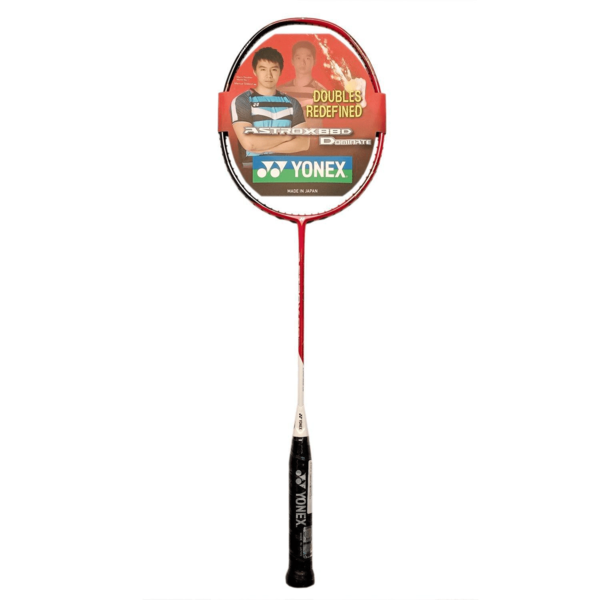
The Yonex Astrox 88D is built around rear-court attacking, but its head-heavy balance and stiff response reward some players while tiring others. By the end, you will know how the racket affects smashes, clears, defence and net play, which version and setup to buy, and what an in-person Whitefield fitting can verify.
Key takeaways
- Head-heavy balance supports powerful smashes and deep rear-court clears.
- Choose the 88D if you have sound timing and a fast, controlled swing.
- Check racket weight, grip size, shaft feel, authenticity and string tension before buying.
- Academies should match the 88D to advanced rear-court players, not every learner.
What does the Astrox 88D change in your game?
The main Yonex Astrox 88D badminton racket benefits are extra leverage, a forceful rear-court attack and a solid response on full swings. Its head-heavy balance adds mass behind the shuttle, helping you produce heavier smashes, steeper angles and deep clears when your timing and swing speed are sound.
The racket’s extended length increases reach and gives the shuttle more leverage at contact. That helps with high clears, jump smashes and defensive lifts from the rear court, but it also increases swing inertia. You must prepare earlier for fast drives, and late contact can leave the racket slow through the hitting zone.
Its stiff shaft responds quickly instead of bending deeply and releasing power for you. A technically consistent player gets a direct, crisp feel for smashes, punch clears and counter-attacks; a player with a slower or incomplete swing may get less power and more mishits.
The same stiffness rewards firm defensive blocks, but the head-heavy frame demands quicker preparation than an even-balance racket.
Defence therefore becomes a trade-off. You can block hard smashes with stability and redirect the shuttle, yet repeated drive exchanges, flat lifts and rapid front-court interceptions require stronger wrist control. The 88D suits a rear-court attacker more than a player who wants effortless manoeuvrability at the net.
Who benefits from the 88D, and who will struggle with it?
The Astrox 88D suits intermediate and advanced doubles players who attack from the rear court with a fast, full swing. Its head-heavy balance adds momentum to smashes and clears, while the stiff shaft rewards clean timing and strong forearm control rather than creating effortless power.
A beginner, compact swinger or player with limited shoulder strength can struggle to manoeuvre it. The extra head weight slows preparation for flat drives, defensive blocks and rapid racket changes; late contact then produces weak clears or mishits. A high-tension setup makes that problem sharper by shrinking the forgiving sweet spot.
| Player or role | How the 88D fits | Better alternative when it does not |
|---|---|---|
| Rear-court doubles attacker | Supports steep smashes, deep clears and repeated attacking shots | None if you already swing comfortably and recover quickly |
| Front-court doubles player | Usable, but slower during interceptions, net kills and quick exchanges | Astrox 88S or another faster, even-balance racket |
| Intermediate or advanced player | Rewards timing, strength and consistent preparation | A lighter model while technique and defensive speed develop |
| Beginner or compact swinger | Demands more effort to generate and control racket speed | Lighter, more flexible racket with a larger forgiving response |
| Fast defensive specialist | Adds power but can delay blocks and counter-drives | Head-light or lighter racket for quicker repositioning |
Choose a different racket if your priority is easy power, rapid defence or effortless net play. A lighter, faster model fits players who win through speed; a flexible shaft helps those who cannot yet load a stiff shaft with a decisive swing.
A doubles pair can also split roles: 88D at the rear and 88S at the front.
How does the 88D compare with other Yonex racket choices?
The phrase “yonex astrox dominate badminton store in whitefield” is not proof that the 88D suits every player. Compare the complete version name, because Pro, Tour and Play models can differ in shaft construction, finish, weight, balance and recommended tension.
| Option | Court feel | Choose it when |
|---|---|---|
| Astrox 88D | Head-heavy and stiff, with strong rear-court momentum | You build attacks from the back and want heavier smashes and stable clears |
| Astrox 88S | Faster through short exchanges and front-court movement | You intercept, drive and finish near the net |
| Voltric Z Force II | More demanding power-oriented response | You have fast swings and want maximum attacking weight rather than easy defence |
| Muscle Power 29 Light | Lighter handling with less effort per swing | You prioritise quick recovery, casual play or reduced arm fatigue |
| Head-heavy category | More mass behind overhead shots, slower direction changes | You attack from the rear court and accept demanding defence |
| Even-balance category | A compromise between power and manoeuvrability | You rotate between front, mid and rear court |
| Head-light category | Quickest handling for drives and defence | You counterattack, defend frequently or need low swing effort |
Do not compare labels alone. A 3U 88D usually feels more stable and powerful than a 4U version, while the 4U is easier to defend with repeatedly. Test both if possible, then check grip size, balance and shaft response.
A doubles pair can sensibly combine an 88D and 88S according to court roles. Choose a lighter or more flexible racket instead if the 88D slows your preparation, strains your arm or leaves you late against fast drives.
What should you check before buying and stringing an Astrox 88D?
Do not pay for a racket labelled only “88D.” Pro, Tour and Play versions can differ in construction, finish, balance, recommended tension and price, so record the complete model name before comparing offers. This Yonex Astrox 88D racket buying guide checklist prevents an expensive mismatch:
1. Confirm the version. Match the full name on the frame, shaft and box with the manufacturer’s listing. Check whether it is the current generation, not an older 88D sold under a similar colour scheme.
2. Confirm weight and grip. Compare the printed 3U or 4U category and G4, G5 or other grip code with your requirement. A 3U feels more stable but demands more effort in defence; remember that strings and an overgrip add weight.
3. Check authenticity. Inspect the shaft and cone for clean, consistent markings and serial numbers, then ensure the numbers, model, box and invoice agree. Buy from a traceable seller rather than relying on a low price or hologram alone.
4. Get warranty terms in writing. Ask who handles a claim, what proof is required, and whether damage from clashes, incorrect stringing or paint chips is excluded.
5. Specify string and tension before payment. Write down the exact string model and gauge, whether the racket arrives strung, and the tension in pounds. Stay within the version’s printed limit; a 4U listing may state 20–28 lb, but your technique and string choice still determine a sensible setting.
Puntu Sports can perform this in-person match between racket, string, serial, warranty and invoice before you leave.
Related product
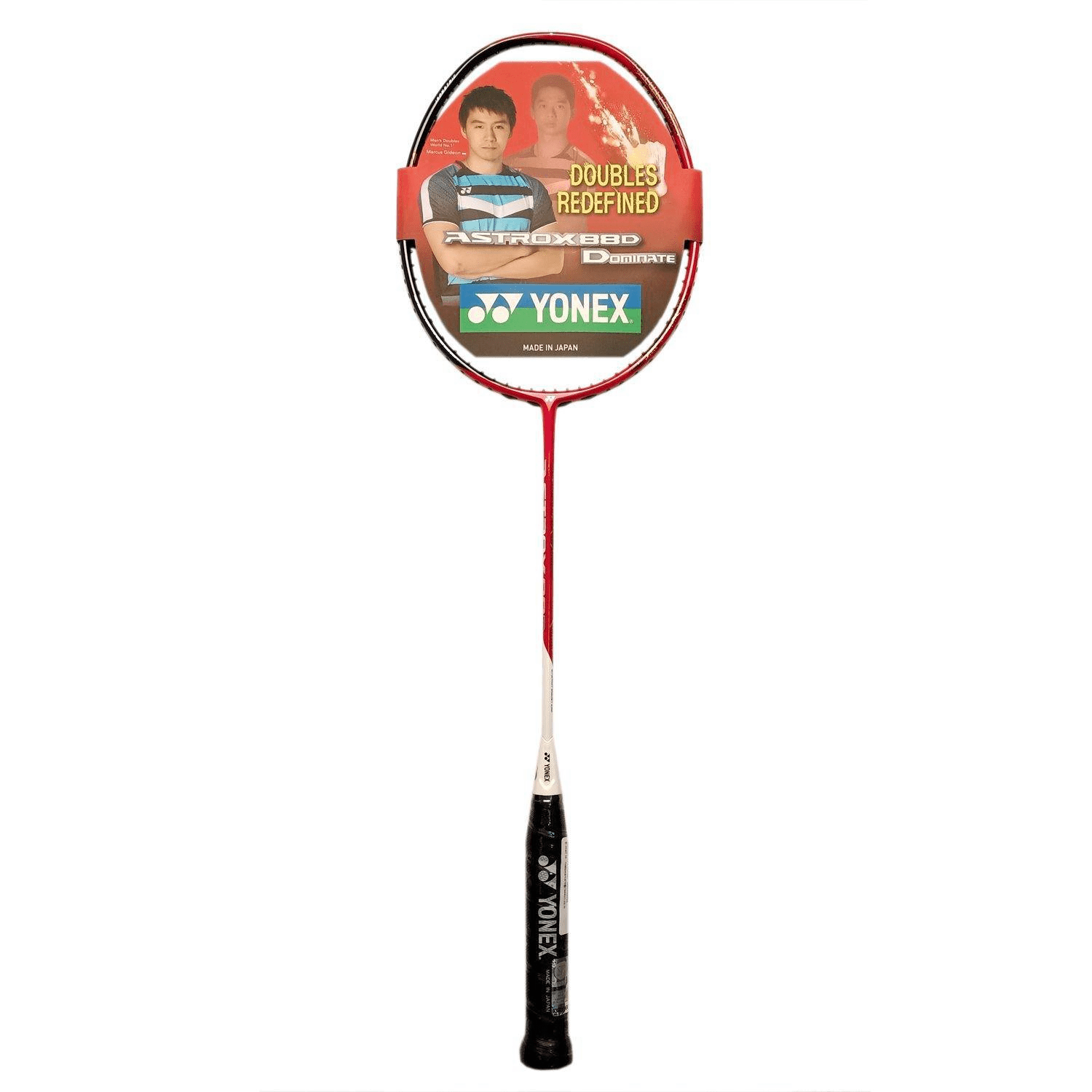 | BADMINTON RACQUETS Yonex Astrox 88D (Dominate) Badminton Racket UN STRUNG Flex Stiff Frame H.M. Graphite / Nanometric / Tungsten Shaft H.M. View product → |
How should players and academies use the 88D over time?
Assign the 88D to players who genuinely spend rallies in the rear court, where its head-heavy attack supports smashes and deep clears. A doubles pair does not need identical rackets: the rear-court player can use the 88D while the front-court player uses a faster model such as the 88S.
For a regular player, keep the 88D as your match racket only if you can prepare early and control repeated overhead swings without shoulder or forearm fatigue. If defence becomes slow, rotate to a lighter racket for drills rather than forcing the 88D into every session.
An academy should standardise each training group by model, weight, grip size and string tension. A Yonex badminton racket for sports academies is useful only when students receive predictable equipment; buying mixed variants under one model name makes technique comparisons unreliable.
Give stronger intermediate and advanced rear-court players the 88D, while beginners start with lighter, more forgiving rackets.
Use one equipment log per racket. Record:
- String type, tension, stringing date and breakage date
- Grip replacement dates and loss of tackiness
- Grommet wear, frame marks and suspected collision damage
- Repairs, warranty claims and the matched spare assigned to that racket
Budget for regular restringing, replacement grips, grommets and at least one matched spare per active player or training group. A clash can weaken a frame before a crack appears, so inspect the racket after collisions and remove it from play if the frame bends, splits or develops a new rattle.
Frequently asked questions
What does the Yonex Astrox 88D change in your game?
Its head-heavy balance adds leverage behind full swings, supporting heavier smashes, steeper angles and deep clears when your timing and swing speed are sound.
Who benefits from the Astrox 88D, and who will struggle with it?
Rear-court players with strong timing and fast swings benefit most. Beginners and players who rely on quick defensive exchanges may find the head-heavy frame slower to manoeuvre.
How does the Astrox 88D compare with other Yonex rackets?
The 88D prioritises rear-court power and a solid full-swing response. Choose a lighter or more even-balanced Yonex racket when faster handling and defence matter more than maximum leverage.
What should you check before buying and stringing an Astrox 88D?
Confirm the racket weight, grip size, shaft feel, genuine serial markings, frame condition and recommended string-tension range. Match the string and tension to your technique instead of choosing maximum tension automatically.