
Choosing this racket requires more than deciding whether a hall is indoors: weight, balance, shaft response, shuttle speed, airflow and grip moisture all affect how it performs. By the end, you will know which specifications to verify, how to test it in your own hall, and whether its light build suits your game or team.
Key takeaways
- Check the actual frame’s weight, balance, shaft flex and grip markings.
- A 5U head-heavy racket offers easy handling with added support for clears.
- Compare rackets in the same hall using identical strings and tension.
- Dry the grip and store the racket in a ventilated bag after play.
What the Muscle Power 29 Light specification means on court
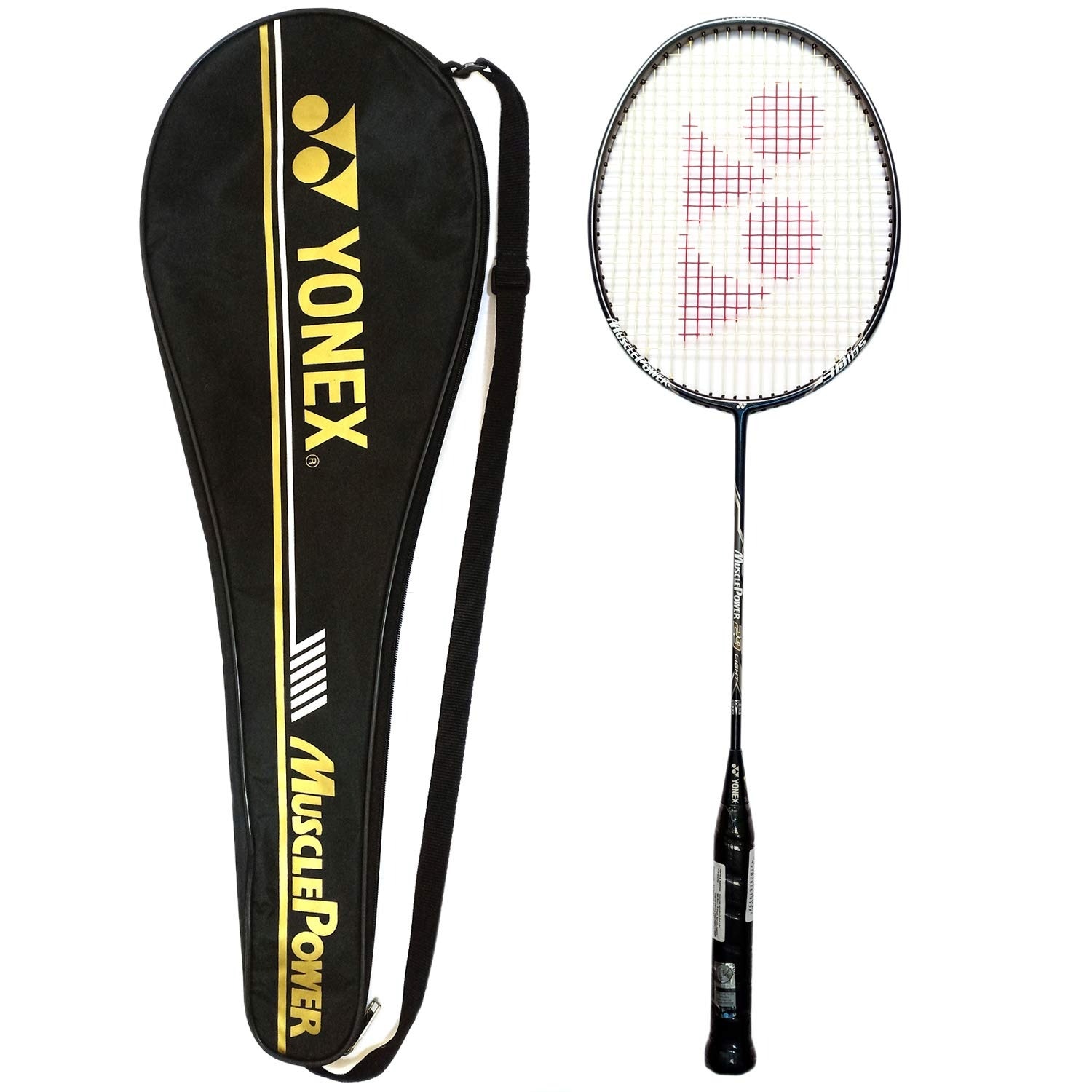
A useful Yonex Muscle Power 29 Light comparison starts with its listed 5U weight: approximately 75–79 g before strings. Retail specifications commonly show a head-heavy balance, medium-flex shaft, G4 grip, isometric head and standard length of about 675 mm. Verify those markings on the actual frame because specifications vary by market and production run.
| Racket setup | On-court effect | Trade-off |
|---|---|---|
| 5U Muscle Power 29 Light | Faster drives, blocks and defensive reactions | Less stability and mass on off-centre hits |
| 3U or 4U racket | More plough-through for clears and smashes | Slower racket-head changes and greater fatigue |
| Head-light racket | Quicker flat exchanges and interceptions | Less help from the head on rear-court shots |
| Heavier head-heavy racket | Stronger smash and clear penetration | Higher swing effort |
The medium-flex shaft can feel accessible to beginners, juniors and casual doubles players, but “intermediate” is not a universal fit. It suits an indoor game badminton racket role when low swing weight matters more than maximum rear-court power.
The commonly published 20–30 lb range is a frame-safety limit, not a universal playing recommendation. Choose the lower or middle part of that range for a larger, more forgiving sweet spot; high tension reduces that margin, especially on a lightweight frame.
How an indoor hall changes the racket’s playing feel
Heat, high relative humidity, fans, air-conditioning, open doors and condensation can change an indoor hall even without rain or direct sun. Temperature and humidity mainly alter feather-shuttle speed and durability, not the Yonex Muscle Power 29 Light’s nominal balance.
A badminton racket for humid weather cannot compensate for a shuttle that is too fast or too slow.
| Playing factor | What changes | Practical result |
|---|---|---|
| Head-heavy setup | Adds weight to the racket head | Clears and smashes feel more supported than with a truly head-light frame |
| 5U mass | Keeps swing weight low | Quick drives, blocks and repeated doubles exchanges feel easier |
| Cross-draft | Moves the shuttle differently across court | One side becomes faster; no racket corrects the airflow |
For a Yonex Muscle Power 29 Light for indoor game weather comparison, test the actual feather shuttle in the actual hall. Use the BWF-style speed test: hit from near one back boundary toward the opposite back boundary, then check that the shuttle lands roughly 530–990 mm short of the far back boundary.
Adjust shuttle speed or preparation before blaming the racket.
Test both court ends. A fan or ventilation outlet can make clears, lifts and smashes behave differently in each direction, while condensation can make the grip slippery. A generic weather chart cannot replace a feather-shuttle test under the hall’s real temperature, humidity and airflow.
Which player benefits from this balance and weight
The Muscle Power 29 Light suits a player who values fast handling over maximum hitting mass. Its 5U weight helps juniors, casual players and doubles players change racket direction quickly, defend hard drives and stay fresher through long sessions.
Use this fit checklist:
- Choose it if you can clear from baseline to baseline without forcing your forearm.
- Check that the racket stays stable when you strike off-centre.
- Keep it if your hand remains relaxed through a full session.
- Avoid it if you need heavy rear-court penetration or regularly face powerful smashes.
A very strong or advanced player can find a 5U frame unstable against hard smashes, especially at high tension. Do not control a slippery or underpowered racket by gripping harder: that reduces racket-head speed and can irritate the forearm or elbow.
| Option | Main advantage | Best fit |
|---|---|---|
| Lighter-feeling head-light racket | Faster defence, flat drives and interceptions | When punch matters less than reaction speed |
| Muscle Power 29 Light | Quick handling with some head weight for clears and smashes | Juniors, casual players and long doubles sessions |
| Even-balance racket | More even compromise between handling and power | All-round doubles play |
| Heavier head-heavy racket | Greater smash and clear penetration | Rear-court singles and powerful attackers |
For a useful Yonex Muscle Power 29 Light comparison, test your baseline clears, off-centre stability and relaxed grip rather than choosing by the word “intermediate” alone.
How to make a fair hall-to-hall racket comparison
To make a useful Yonex Muscle Power 29 Light for indoor game weather comparison, remove every variable except the frame. A few warm-up swings cannot reveal whether its low mass helps during a rally or simply reduces stability.
1. String both rackets with the same string model and gauge at the same tension. Use the same G4 grip type, overgrip type and approximate finished weight, then record those details.
2. Use one shuttle tube and one shuttle speed throughout the test. Play on the same court, warm up for the same duration, and test from both court ends because fans, open doors and ventilation outlets can change the airflow.
3. Record clear length, defensive blocks, flat drives, net lifts and rear-court smashes for each racket. Repeat each shot enough to expose a pattern, rather than judging the first few hits.
4. After 30–45 minutes, note whether the 5U racket recovers faster during doubles exchanges, twists on hard contact, or leaves your shoulder and forearm less tired. Compare the same player, drills and court position.
For a Yonex racket for sports teams, order one regional version with the same G4 size, stringer, tension and overgrip. Measure every finished racket’s weight and balance; a 5U label permits manufacturing variation, and catalogue weight excludes playing changes.
Puntu Sports can make this comparison more useful by checking the actual frames, discussing your hall and arranging consistent stringing, instead of treating a catalogue weight as the finished playing weight.
Related product
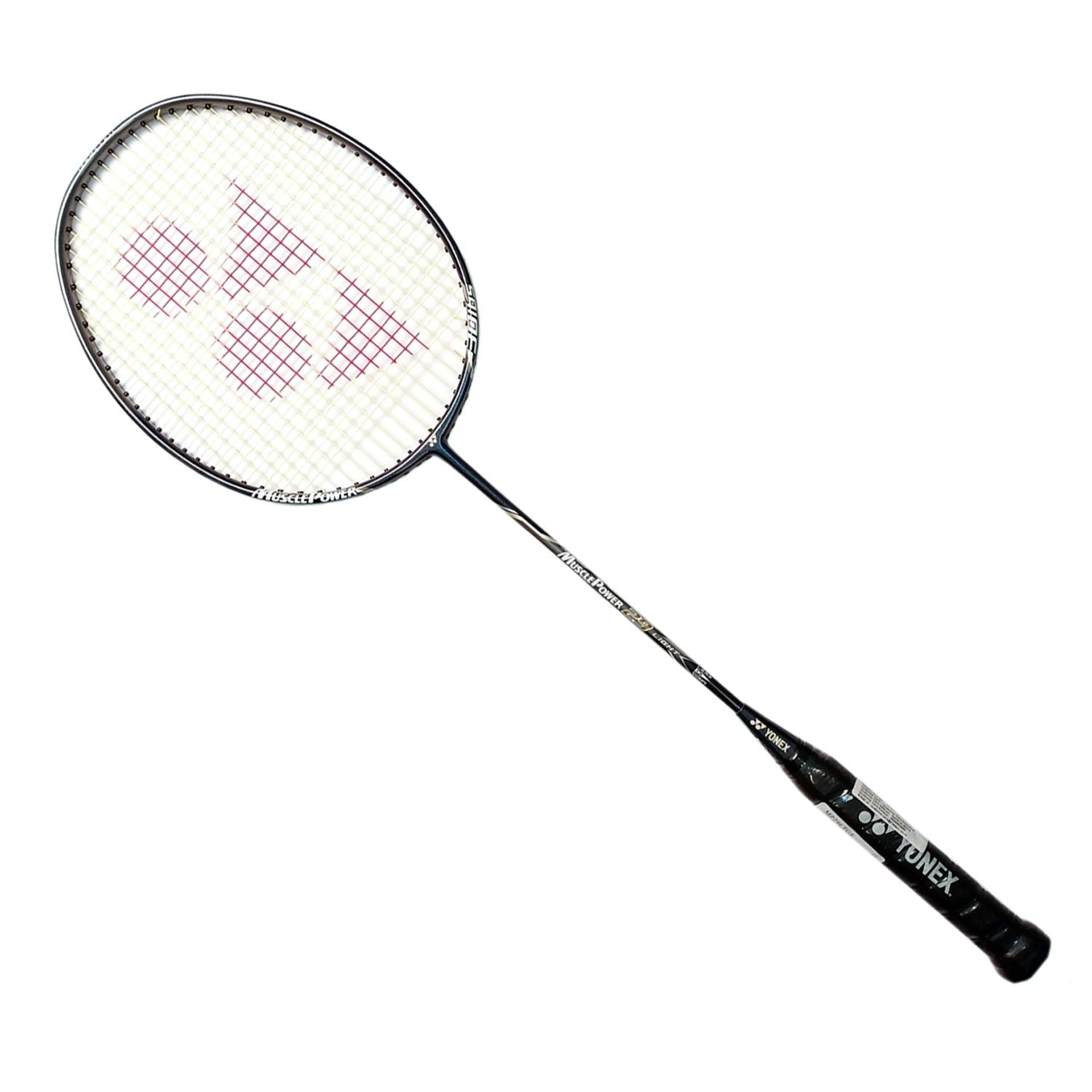 | BADMINTON RACQUETS Brand-YONEX Color - Dark Grey Frame Material - Graphite Shape - Isometric Material Type - Graphite, Carbon Fiber Skill Level - Intermediate... View product → |
How to protect the racket and grip in humid conditions
Humidity usually compromises the grip before it visibly affects the Muscle Power 29 Light. After play, dry the handle, wipe moisture from the handle and frame, and replace an overgrip that feels saturated or slippery. Carry a towel and an absorbent replacement grip.
1. Remove the racket from your kit bag after play. Never seal a wet racket inside a closed bag; let the grip and frame dry at room temperature. Do not store it in a hot car, where heat can worsen adhesive and frame stress.
2. Keep shuttle tubes dry, because damp feather shuttles lose consistent speed and durability. Inspect the grommets for cracking or flattening before each restringing.
3. Before buying or restringing, check for paint or frame cracks around the 2, 5, 7 and 10 o’clock areas. Ask whether the racket was stored wet, sealed while damp or left in a hot car.
4. Treat the printed 20–30 lb range as a frame limit, not proof that every job is safe. Uneven pulling, bad clamping or an unsuitable machine setting can damage this lightweight frame even within that range. Use a competent badminton stringer, and stop playing immediately after a structural crack appears.
For a badminton racket for humid weather, grip security, dry storage, shuttle choice and service quality matter more than finding a special humidity-resistant frame.
Frequently asked questions
What do the Muscle Power 29 Light specifications mean on court?
A listed 5U weight of about 75–79 g before strings reduces handling effort. Head-heavy balance adds weight toward the racket head, while a medium-flex shaft helps the shaft load during swings. G4 identifies the grip size, and the isometric head describes the head shape.
How does an indoor hall change the racket’s playing feel?
Indoor temperature, humidity, air movement and lighting affect shuttle speed and how the racket feels. Compare the racket in the actual hall because a different court can change timing, control and perceived power.
Who benefits from the Muscle Power 29 Light’s balance and weight?
Players who value low overall weight and manageable handling can benefit from the 5U design. The head-heavy balance suits players who want more weight behind clears and attacking shots, while the medium-flex shaft offers a less demanding feel than a stiff shaft.
How should you protect the racket and grip in humid conditions?
Wipe moisture from the frame and handle after play, replace a damp overgrip, and leave the racket outside its closed bag until dry. Store it away from direct heat and inspect the strings, grommets and grip regularly.